

NitiSaar Consulting

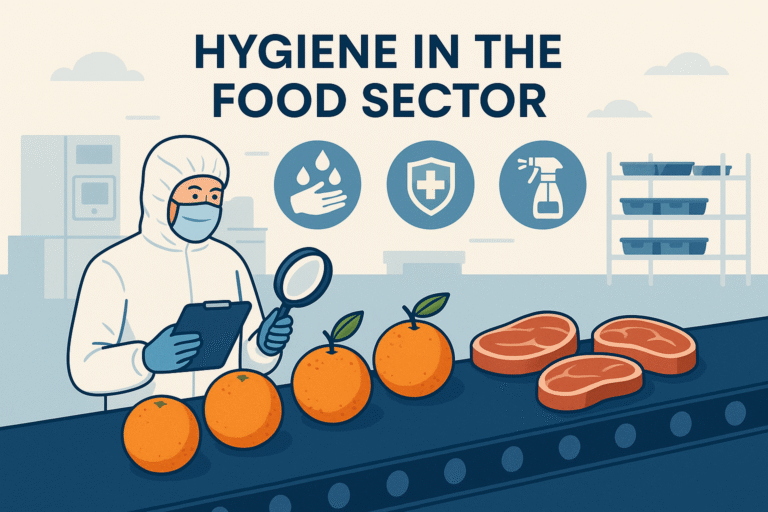
Hygiene in the Food Sector: The Foundation of Food Safety and Brand Trust

Published On : 10 November 2025

In the food industry, hygiene is everything.
From farms to factories, cleanliness and sanitation determine whether food is safe, trustworthy, and export-ready.

According to global health agencies, unsafe food causes millions of illnesses and hundreds of thousands of deaths each year. Contaminated food can carry dangerous bacteria such as E. coli or Salmonella, leading to severe diseases.

That’s why food hygiene is not just about compliance — it’s about protecting consumers and building brand reputation. Even a single hygiene failure or product recall can permanently damage a company’s credibility, especially in export markets.

1. Hygiene Standards and Regulations

Around the world, governments have set strict hygiene rules to ensure food safety.

India – FSSAI Standards

The Food Safety and Standards Authority of India (FSSAI) requires every Food Business Operator (FBO) to implement a Food Safety Management System (FSMS).
This includes:

  • Hazard Analysis and Critical Control Points (HACCP)
  • Good Manufacturing Practices (GMP)
  • Good Hygiene Practices (GHP)

Schedule 4 of the FSSAI Licensing Regulations clearly defines hygiene requirements for processing, packaging, storage, and catering operations.

European Union

The EU Hygiene Package (Regulation 852/2004) makes food operators responsible for food safety and mandates HACCP-based hygiene systems across all production stages.

United States

The Food Safety Modernization Act (FSMA) requires all registered food facilities to follow preventive controls and updated Good Manufacturing Practices (CGMPs) — including hygiene training for staff and documentation of cleaning procedures.

Global Guidelines

The Codex Alimentarius (FAO/WHO) offers international principles of hygienic food handling. Together, these frameworks — Codex, FSSAI, ISO 22002, and BRCGS — form a consistent, reliable global hygiene framework.

2. Core Hygiene Practices in the Food Industry

Strong hygiene practices protect both consumers and companies.
Key hygiene measures include:

Personal Hygiene
  • Proper handwashing stations and protective clothing
  • Health checks for employees
  • Strict no-illness-at-work policy
Facility and Equipment Sanitation
  • Daily cleaning and disinfection of all areas, equipment, and utensils
  • Separation of raw and cooked zones to prevent cross-contamination
  • Pest control programs to eliminate rodents and insects
  • Temperature monitoring in cold storage to control microbial growth
Water and Food Contact Surfaces
  • Use of potable (safe) water for all food processing
  • Regular environmental monitoring and sanitation records
Documentation and Training
  • Maintain cleaning logs, inspection results, and corrective actions
  • Provide continuous hygiene and food safety training to staff
  • Conduct hygiene audits regularly to verify compliance

Following these practices ensures consistent cleanliness and reduces the risk of contamination throughout the food chain.

3. Good Hygiene Practices (GHP) and the Supply Chain

Good Hygiene Practices are interconnected with:

  • Good Agricultural Practices (GAP) — safe farming and harvesting
  • Good Distribution Practices (GDP) — hygienic storage and transport

A well-trained workforce and well-documented procedures are vital.
Even global regulations like FSMA and FSSAI require proof of hygiene training during audits.

Regular monitoring, internal inspections, and strong hygiene culture ensure that every step — from production to export — maintains safety and consistency.

4. Hygiene, Brand Image, and Export Success

Clean, hygienically made products create trust.
When a label says “Hygienically Manufactured” or holds certifications like ISO 22000, FSSC 22000, or BRCGS, buyers feel confident about quality.

On the other hand, poor hygiene can cause:

  • Product recalls or rejections
  • Import bans in international markets
  • Permanent loss of customer trust

For instance, shipments of spices or produce have been rejected by EU ports for hygiene-related issues such as pesticide residues or microbial contamination.

To prevent this, global importers and supermarket chains demand suppliers to hold GFSI-recognized certifications, which confirm robust hygiene and safety controls.

Thus, good hygiene is not just a safety measure — it’s a business advantage that unlocks access to global markets.

5. Building a Hygiene-First Culture

For every food manufacturer, hygiene should be a daily discipline, not a one-time activity.
To maintain hygiene excellence:

  • Keep infrastructure clean and well-designed
  • Enforce strict hygiene rules for all staff
  • Follow a documented FSMS (Food Safety Management System)
  • Conduct regular internal hygiene audits
  • Use technology for traceability and real-time monitoring

Embedding hygiene into company culture protects consumers, enhances brand value, and ensures compliance with both FSSAI and international standards.

Conclusion

In the global food trade, hygiene is the heart of food safety.
It protects public health, strengthens brand trust, and ensures smooth market access.

For Indian and international food businesses, compliance with FSSAI, HACCP, GMP, and GHP standards is non-negotiable.
By maintaining clean facilities, trained staff, and documented systems, manufacturers can achieve consistent product quality and build long-term export credibility.

Related Blogs

Scroll to Top